About
World-first cancer surgery at Austin Health saves patients
- Home
- About
- Latest news
- World-first cancer surgery at Austin Health saves patients

16 February 2026
Doctors at Austin Health are performing a world-first cancer surgery so extreme it is carried out while patients are temporarily dead, saving people who would otherwise have no chance of survival.
The surgery treats one of the deadliest forms of kidney cancer, where a tumour grows from the kidney into major blood vessels, up into the heart, and blocks blood flow from the liver. Without intervention, patients quickly die from heart failure, liver failure or the cancer itself.
The breakthrough began in 2021, when surgeons treated their first patient, a woman in her 50s from Ballarat. Her cancer had advanced at an alarming pace and there were no safe options left.
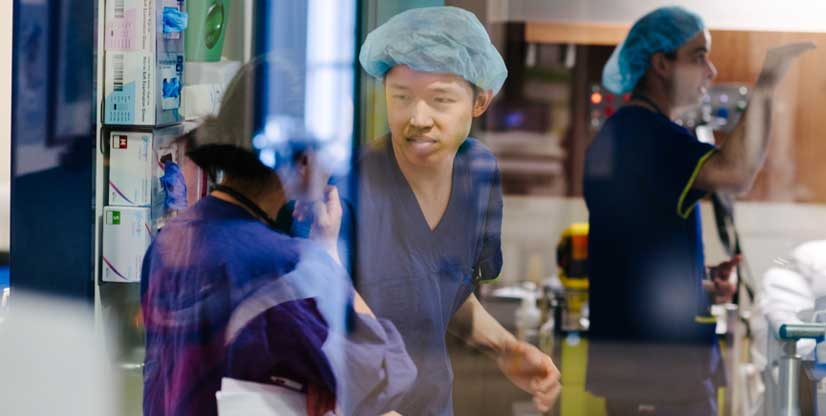
Inside the operating theatre, the team made a radical decision. They cooled her body and completely stopped her blood circulation for up to 30 minutes, allowing surgeons to remove the tumour through the heart, unblock the liver veins and close the large vein preventing the tumour growing through. All this was done without touching the liver or opening the abdomen.
They worked right to the limit and every second counted. She has since fully recovered and is now living a normal life.
Austin Health surgeons have now treated 10 patients using this approach.
The most recent patient, Hock Yap, is a 68-year-old retired businessman from Doncaster, married with two adult children.
Hock first went to his GP on 18 December 2025 with unexplained stomach pain. The next day, he was diagnosed with kidney cancer and told he had a 12cm tumour.
He was transferred to Austin Hospital on 20 December and was scheduled for surgery on New Year’s Eve. Wanting to spend what he feared could be his last Christmas with family, he went home on Christmas Eve.
On Christmas Day, Austin Health doctors called him in for urgent blood tests. Later that afternoon, he received another call.
“They told me it was an emergency. My liver was failing because the tumour had blocked it. I needed to return to hospital and prepare for emergency surgery,” Hock said.
He said goodbye to his family and came straight to hospital.
At 7am on Boxing Day, Hock underwent his first life-saving surgery. This first stage operation can last up to eight hours, including up to 30 minutes where all blood circulation is stopped while surgeons race against the clock.
His second major surgery was performed on Monday 6 January 2026. This stage can take up to 14 hours and involves removing the cancer-destroyed kidney and reconstructing major blood vessels.
Hock is now out of hospital and recovering well.
“All the doctors and nurses at Austin are my heroes,” he said.
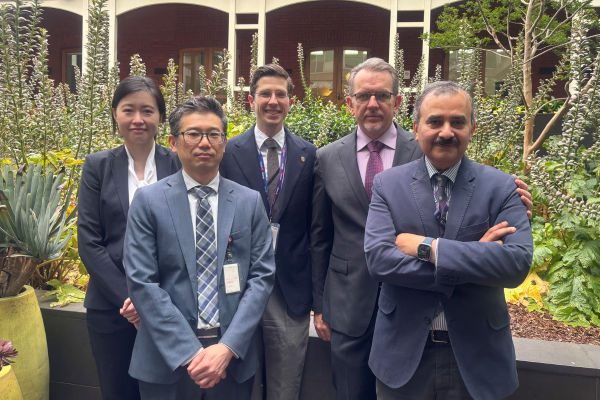
Professor Marcos Perini, Hepatobiliary and Transplant Surgeon, says that "this is a genuine-life-saving operation".
"Without this surgery, these patients would die. Across these ten cases we have become more confident and more precise. Austin Health is doing what others cannot. Because of our combined cancer, heart and liver transplant expertise, we can take on the hardest cases and give people a chance when there are no other options," says Prof Perini.