About
$25 treatment could help save lives in ICU
- Home
- About
- Latest news
- $25 treatment could help save lives in ICU
16 June 2026
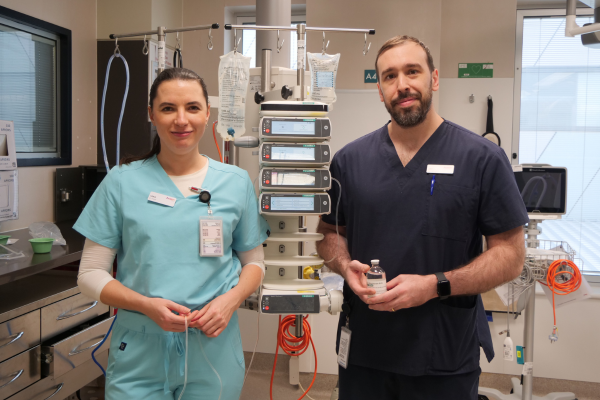
Bicarb soda could help critically ill ICU patients avoid dialysis and survive life-threatening illness, according to major new research led by an Austin Health intensive care specialist.
The same ingredient commonly found in household cleaning and baking products is now at the centre of a major international study investigating whether sodium bicarbonate can improve outcomes for patients experiencing shock and dangerous acid levels in the blood.
Researchers found the treatment may help reduce the risk of death, dialysis and ongoing kidney damage in patients who had developed acute kidney injury.
Acute kidney injury is one of the most serious complications faced by critically ill patients and can develop rapidly in patients suffering severe infections, septic shock, major surgery, cardiac events and other life-threatening illnesses.
These patients can quickly deteriorate, with many requiring dialysis in intensive care and some developing permanent kidney damage or dying.
Researchers estimate around 70,000 Australians each year develop acute kidney injury while critically ill in intensive care. Of those patients, an estimated 15,000 to 20,000 may also experience shock and severe metabolic acidosis, potentially making them eligible for this treatment.
The discovery emerged from a major international clinical trial investigating whether sodium bicarbonate could improve outcomes for critically ill patients experiencing shock and severe metabolic acidosis.
While the original trial did not find improved outcomes across all patients, researchers identified a potential benefit in patients who had developed acute kidney injury.
In this group, the treatment showed potential to reduce the risk of death, dialysis and ongoing kidney damage, prompting plans for a larger international follow-up study to confirm the findings.
The international study involved 500 critically ill patients across 55 intensive care units in seven countries and was led by Austin Health Intensivist and Director of Intensive Care Research Associate Professor Ary Serpa Neto.
The treatment used in the trial involved a carefully controlled five-hour intravenous infusion of sodium bicarbonate, commonly used in hospitals to correct dangerously acidic blood.
In Australia, the treatment used in this study costs as little as $25 per patient. It may also reduce the need for dialysis, which alone can cost more than $1,300 a day in intensive care.
The study has been published in the New England Journal of Medicine, widely regarded as the world’s most prestigious medical journal, and was presented at the internationally renowned Critical Care Reviews meeting in Belfast.
It was funded through a $2 million National Health and Medical Research Council grant and coordinated through the Australian and New Zealand Intensive Care Research Centre (ANZIC-RC), Monash University, with Austin Health serving as one of the lead recruiting sites.
Austin Health researchers are now planning a larger international follow-up study to confirm whether the treatment can reduce deaths, dialysis and long-term kidney damage in high-risk ICU patients with acute kidney injury.